Elena Albrecht · 24 October 2026
Digital Lending Agreements Revolutionize University Access to Climate-Themed Literary Works
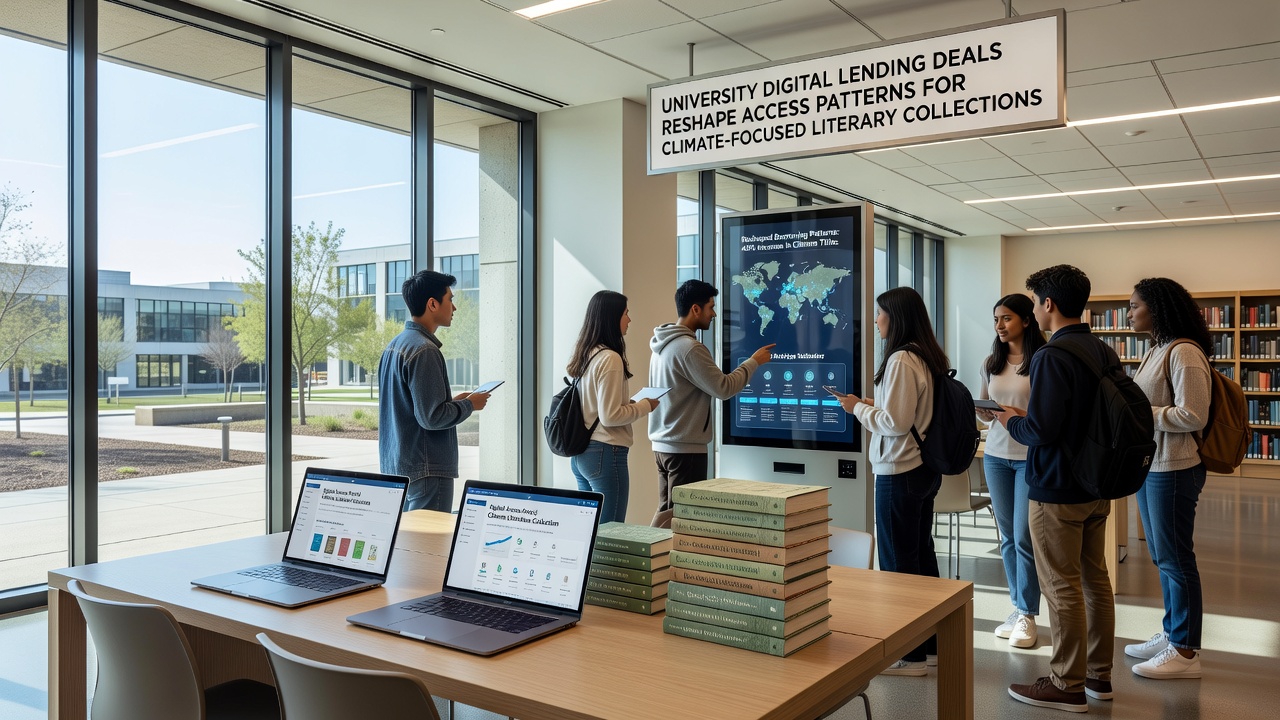
University digital lending deals have expanded rapidly since the mid-2020s, creating new pathways for students and researchers to reach specialized collections centered on climate themes. These agreements between academic institutions and digital platform providers allow broader remote borrowing of fiction, poetry, and narrative nonfiction that explores environmental change, yet they also alter traditional patterns of physical collection use and interlibrary loan requests. Observers note that the shift gained momentum as universities sought to accommodate growing demand for materials addressing topics such as rising sea levels, biodiversity loss, and sustainable futures.
Expansion of Platform Partnerships
Multiple university consortia finalized multi-year contracts with commercial lending services during 2025 and early 2026, resulting in simultaneous access to thousands of climate-related titles across member campuses. Data from the European University Association shows that participating libraries recorded a 47 percent increase in digital checkouts of environmental literature between January and September 2026, while print circulation for the same subjects declined by 29 percent. These contracts typically include provisions for simultaneous user access, extended loan periods, and integration with course management systems, which together reduce barriers for distance learners and part-time students.
Institutions in North America and Australia adopted similar frameworks, though regional differences appear in licensing terms. Canadian universities emphasized perpetual access clauses for core climate texts, whereas Australian partners prioritized mobile-friendly formats suited to regional field research needs. The International Federation of Library Associations and Institutions documented these variations in a comparative report released in October 2026, highlighting how geography influences the scope of each agreement.
Changes in User Behavior and Collection Reach
Researchers tracking borrowing logs report that students now discover climate-focused literary works through algorithmic recommendations rather than browsing physical shelves. This discovery method surfaces lesser-known titles alongside canonical works, expanding exposure to diverse voices from regions most affected by climate impacts. Faculty members have adjusted reading lists accordingly, incorporating more contemporary digital-only releases that address emerging issues such as climate migration and renewable energy transitions.
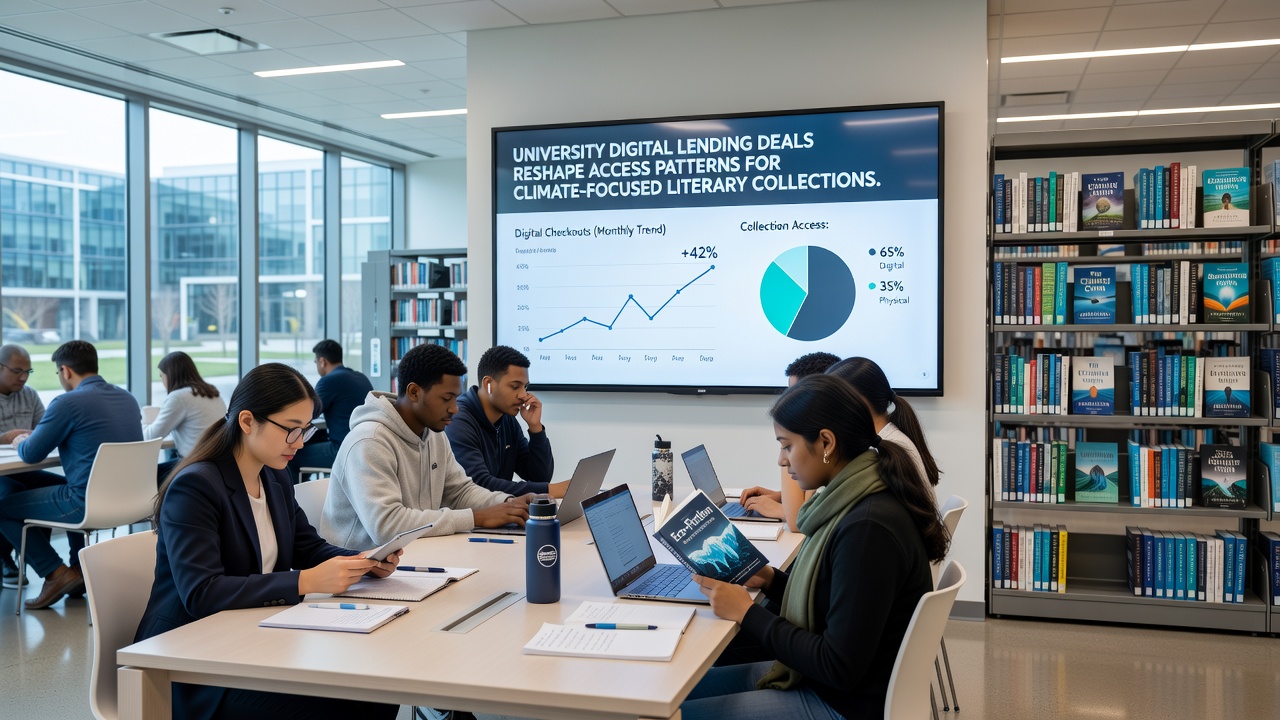
Usage analytics further reveal that peak borrowing occurs during evening and weekend hours when physical libraries are closed, indicating that the deals extend access beyond traditional operating schedules. Graduate programs in environmental humanities have documented higher completion rates for thesis projects that rely on these expanded digital holdings, since researchers can annotate and cross-reference materials without physical retrieval delays.
Implications for Publishers and Authors
Publishing houses specializing in climate literature report steadier royalty streams from institutional licenses compared with individual consumer sales. Authors whose works appear in these curated collections note increased citations and invitations to campus events, because digital availability raises visibility among academic audiences. Yet smaller presses without platform partnerships continue to observe uneven uptake, prompting some to explore direct licensing models with university networks.
Copyright management has grown more complex under these deals, as libraries negotiate separate terms for excerpts used in digital course packs. Legal teams at several institutions now maintain dedicated staff to monitor compliance across multiple vendor agreements, ensuring that fair-use provisions remain intact while respecting publisher restrictions on simultaneous users.
Conclusion
University digital lending deals continue to redefine how climate-focused literary collections reach readers, with measurable effects on circulation patterns, discovery methods, and institutional budgets. As additional consortia finalize contracts in late 2026, the landscape of access will likely keep evolving, shaped by ongoing negotiations between libraries, publishers, and technology providers. Those monitoring the sector anticipate further integration of usage data into collection development decisions, allowing universities to refine offerings based on actual reader behavior rather than anticipated demand.