
Kai Koch · 26 September 2026
Literary Gatherings Highlighting Emerging Authors Prompt Universities to Revise Publishing Terms
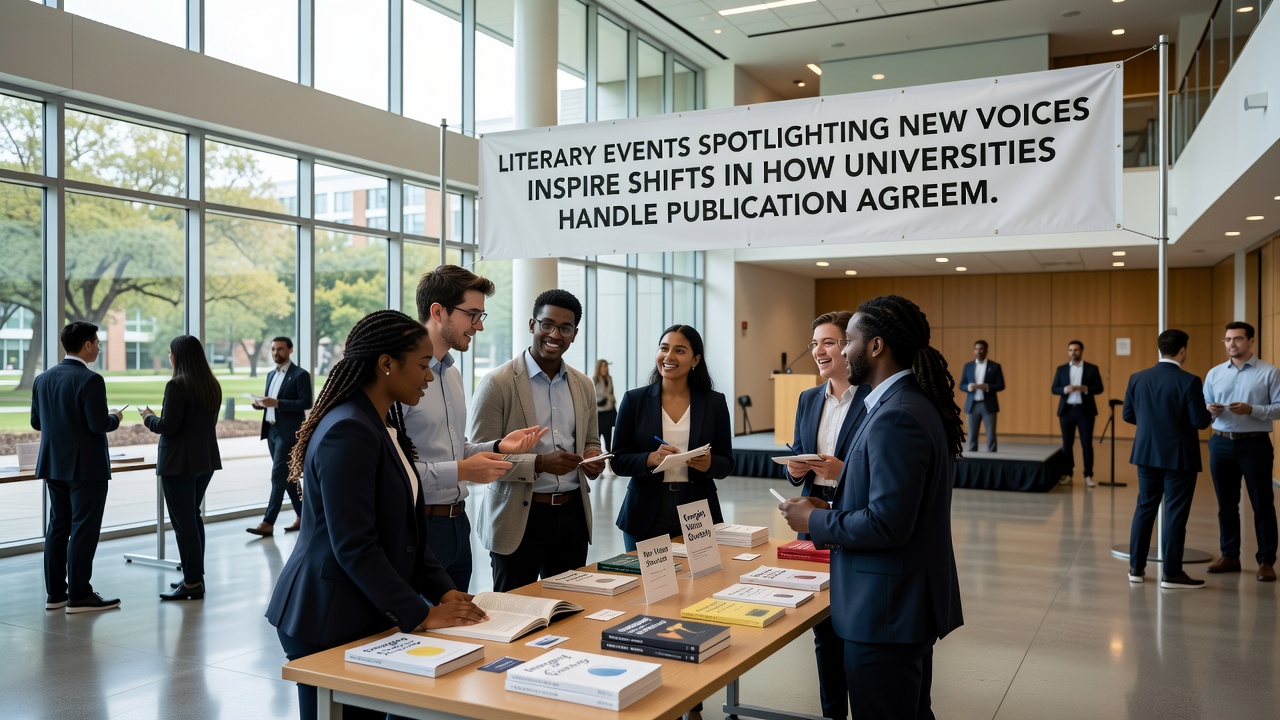
Universities across multiple continents have started adjusting their standard publication agreements after literary events placed new emphasis on emerging writers and their contract concerns, and data from academic consortia shows these gatherings often feature direct conversations between authors and institutional representatives about rights retention plus revenue sharing.
Events Driving Contract Discussions
Literary festivals and book fairs regularly schedule sessions where first-time authors describe challenges with traditional university press contracts, and these presentations have coincided with policy reviews at several institutions since 2023. Observers note that panels focused on digital distribution and translation rights draw large audiences of graduate students and early-career researchers who later advocate for similar terms on their own campuses. Figures released by the European University Association indicate a 17 percent rise in queries about author rights at member universities between 2022 and 2025, correlating with increased attendance at events that spotlight debut voices.
Adjustments to Standard Agreements
Publication contracts at many research universities now incorporate clauses that allow authors to retain copyright for non-commercial reuse while granting the press exclusive commercial rights for an initial period, and this structure emerged after repeated requests at public forums. Several Canadian institutions updated their templates in early 2025 to include automatic open-access options after 12 months, following presentations at regional literary gatherings where writers shared experiences with delayed access to their own work. The Australian Research Council published updated guidelines in 2024 that encourage universities to adopt shorter embargo periods, and those recommendations reference feedback collected during author-focused workshops held the previous year.
What's interesting is how these changes often appear first at smaller presses affiliated with regional universities before spreading to larger operations, and contract language now frequently addresses audiobook rights and derivative works that literary events have highlighted as growing revenue streams for new authors.
Implementation Across Regions
European universities participating in the Horizon Europe framework have aligned some agreement terms with open science requirements, yet implementation varies by country and depends on national funding rules. In North America, consortia such as the Big Ten Academic Alliance have circulated model contracts that limit non-compete clauses, and these models gained traction after sessions at major book fairs where multiple authors described conflicts with prior agreements. Data collected by the Social Sciences and Humanities Research Council of Canada shows that 42 percent of surveyed faculty members requested rights-retention language in their most recent contracts, up from 29 percent three years earlier.
September 2026 Developments
Planning documents for September 2026 indicate several European and Australian universities will host joint sessions during international literary events to review pilot results from revised contracts, and organizers expect participation from representatives of more than 60 institutions. These sessions will examine metrics on author satisfaction and download rates for open-access editions released under the new terms. Preliminary reports already circulated among planning committees suggest that early adopters recorded higher submission rates from first-time authors when compared with previous cycles.
Monitoring and Future Patterns
Tracking systems at several university systems now log the origin of contract modification requests, and internal reviews reveal that many trace back to conversations initiated at literary events rather than internal committee work alone. Researchers continue to collect comparative data on submission volumes, citation patterns, and author retention under updated agreements, with results expected to inform further refinements before the 2026 gatherings conclude. Institutions that have already implemented changes report streamlined negotiation processes because standardized clauses address the most common concerns raised by emerging writers at public panels.
Conclusion
Universities continue to refine publication agreements in response to patterns observed at literary events that feature new voices, and ongoing data collection from multiple regions will shape additional adjustments in the coming years. The process relies on documented feedback rather than isolated cases, ensuring that contract language reflects the range of issues discussed at these gatherings.