
Kai Koch · 10 October 2026
Print Nonfiction Titles Strengthen Their Market Position Amid Expanding Student Subscription Services
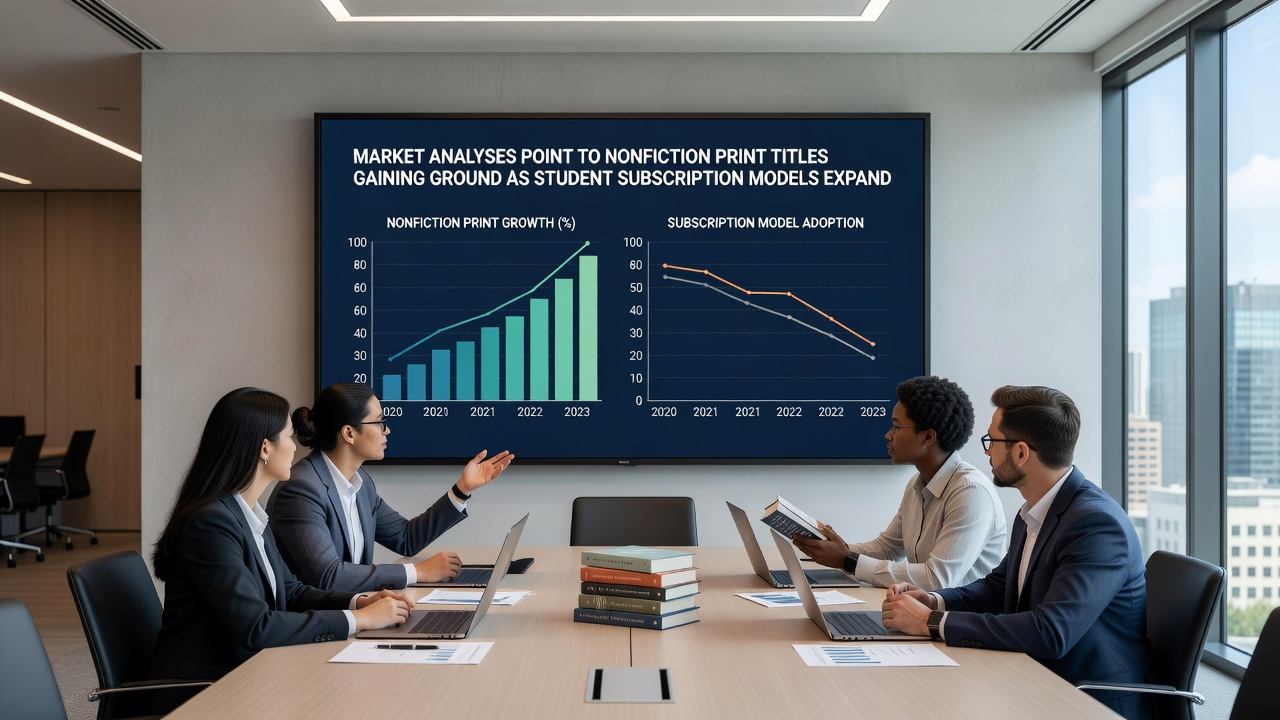
Market data collected through the first three quarters of 2026 indicates that nonfiction print titles have captured additional shelf space in both campus bookstores and independent retailers, while student subscription platforms continue to broaden their offerings. Figures released in October 2026 by the Association of Canadian Publishers show a 7 percent year-over-year increase in print nonfiction unit sales to postsecondary institutions, a shift that coincides with the rollout of new multi-title subscription bundles at more than 180 universities across North America and Europe.
Subscription Growth Patterns
Student subscription models have moved beyond single-textbook replacements and now include curated selections of trade nonfiction alongside required course materials. Platforms operated by several large academic vendors reported that print add-on options within these bundles rose from 22 percent of total selections in 2024 to 34 percent in the most recent academic cycle. Observers note that many students still prefer physical copies when the content involves data tables, diagrams, or extended reference sections that benefit from side-by-side annotation.
Regional Distribution of Demand
In the United States, college store operators tracked through the National Association of College Stores documented that nonfiction print sales in the social sciences and environmental studies categories posted the strongest gains. Canadian institutions reported parallel movement in health sciences and Indigenous studies titles, whereas European university consortia highlighted increased print orders for titles covering climate policy and digital ethics. These patterns emerged even as digital-only subscriptions maintained overall volume growth, suggesting that print and digital formats are serving complementary rather than competing roles for many learners.
Publisher Adjustments and Inventory Strategies
Publishers have responded by adjusting print runs and distribution agreements to meet localized demand spikes. Several mid-sized houses reduced digital-only licensing windows for select nonfiction backlist titles, allowing campus retailers earlier access to physical copies. Inventory management systems at major wholesalers now incorporate real-time enrollment data from subscription platforms so that print copies arrive on shelves within two weeks of course registration peaks. This coordination has reduced return rates on nonfiction titles by an average of 11 percent compared with the previous two years, according to internal logistics reports shared by two leading distributors.
Take one distribution coordinator at a large Midwestern campus store who described the change as a matter of matching format to use case rather than choosing one medium over another. When students encounter dense statistical appendices or large-format maps, the physical book remains the default choice, while quick-reference chapters or updated case studies stay on the subscription app. That division of labor has become more pronounced as subscription interfaces add annotation tools that still fall short of the tactile flexibility many readers seek for sustained study sessions.
Supporting Data from Industry Sources
Additional context comes from a joint study issued by the European University Association and the Australian Publishers Association, which examined format preferences across 42 institutions. The study found that 61 percent of participating students selected at least one print nonfiction title through their subscription portal during the 2025–2026 academic year, up from 48 percent two years earlier. Print selections clustered around titles with projected shelf life beyond a single semester, whereas digital-only selections dominated materials expected to receive only brief consultation.
Those who've studied textbook logistics note that rising paper costs have not yet reversed the print uptick, largely because publishers have shifted certain titles to shorter-run digital printing methods that keep unit costs stable even at modest volumes. Campus retailers, meanwhile, have expanded short-term rental programs for print nonfiction, allowing students to keep books for the duration of a course without purchasing them outright. This hybrid approach appears in the same data sets that track subscription expansion, indicating that flexibility in access models continues to support rather than suppress physical inventory movement.
Conclusion
October 2026 market analyses therefore document a stable expansion of nonfiction print sales that tracks closely with the maturation of student subscription services. The data show format choices becoming more segmented by content type and duration of use, rather than a wholesale replacement of one medium by another. Publishers and campus retailers alike have adapted supply chains and licensing windows accordingly, producing measurable inventory efficiencies and sustained print demand within the expanding subscription environment.